The Short Way to an Oscar? Timothée Chalamet, Marty Supreme, and the Power of Mystery.
%201.png)

I’ve been thinking about how rarely films arrive with a sense of intention that extends beyond the screen. A story, with a positioning & a clear identity. A feeling that how the film exists in culture has been thought through as carefully as what it’s about. Marty Supreme feels like one that get’s real close to that; where strategy, personal branding, and distribution don’t sit on top of the movie, but also shape how audiences perceive it.
I’ve been a Timothée Chalamet fan for a long time. Since Call Me by Your Name, it’s been impossible to look away, or for me to miss his movies. Watching him move between Beautiful Boy, Dune and Little Women, I’ve been captivated by how spot on his choices have been. There’s a seriousness in his boy-ish charm. An obvious obsession for cinema. And no doubt that he genuinely cares about his work, his roles and the outcome of these choices.
So when Marty Supreme was first announced, surprisingly, it didn’t immediately land on my letterboxd wishlist. A sports comedy-drama about table tennis set in 1950s New York sounded niche, even for me.
But something managed to pull me back in. It wasn’t the trailer or the poster. It was Timothée himself — very hard to escape his antics (more on that later), and Hollywood's favorite nepo baby, Gwyneth Paltrow.
Her appearance on Amy Poehler’s Good Hang podcast, with a surprise cameo from director Josh Safdie, sent me down a rabbit hole. The way they spoke about the film felt unusually casual and oddly revealing, without actually giving much away. That combination intrigued me enough to start digging.
Marty Who?
The film follows Marty Mauser, a gifted table tennis player navigating 1950s New York while chasing recognition on his own terms. The character draws from the life of Marty Reisman, a real-life legend who moved through underground ping-pong circuits with sharp wit, glamour, and a reputation for betting on himself. Which sounds to me like long before we even knew the power of personal branding, Mr. Marty understood mystique, self-mythology, and presence.
The thing that has really tickled my brain is how that has mirrored Marty Supreme’s introduction to us. Timothee was approached with the project back in 2018. He spent nearly seven years training in table tennis with Diego Schaaf and Wei Wang, Hollywood’s go-to consultants for sport realism. He was in preparation for all these years, between his massive studio projects. There were no progress updates, no exclusive drops, no breaking news.
As an audience, we’re used to seeing everything now. Everything that anyone does is on the internet — process videos, training montages, the ‘thought’. Films arrive with so much context that discovering something feels historic.
And it paid off. He’s now the youngest actor to win the Golden Globe for Best Actor — a milestone that solidifies how close he is to that Oscar!

A24 and the Art of Marketing Movies
I don’t know if I can be too surprised by an unusual marketing approach. A24 is a studio that has always preferred showing over telling.
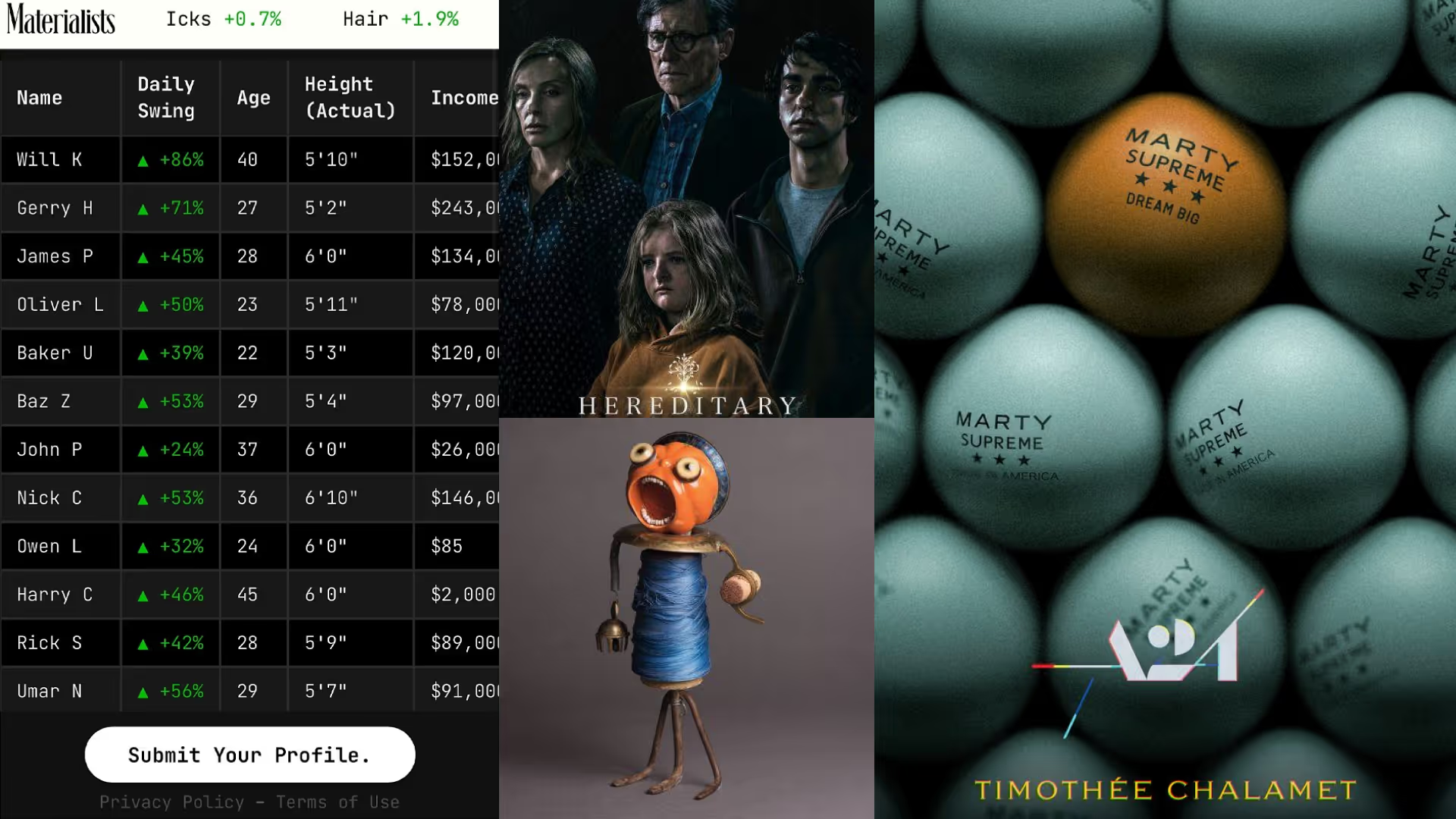
They created a Tinder profile for Ava during Ex Machina’s SXSW premiere. They sent unsettling dolls to audiences at a midnight screening of Hereditary. For Materialists, they worked with the New York Stock Exchange, displaying bachelors’ data on the live ticker to mirror the film’s core idea.
They place you inside the world and let’s you decide what it means.
So Marty Supreme follows that lineage, with a focus on identity—both the character’s and Chalamet’s—paired with a distribution strategy that spans platforms, physical spaces, and culture itself.
This Call Could’ve Been A…Billboard?
One of the first things to drop was the “leaked” Zoom meeting uploaded to A24’s YouTube channel, titled the way an actual desktop recording would be. In it, Chalamet plays an overbearing, slightly delusional ‘boss’ version of himself, pitching increasingly absurd marketing ideas to an uncomfortable but supportive, almost encouraging team.
What’s fascinating is that the ideas that were supposed to be sooooo outlandish & ironic weren’t discarded or weren’t just for the ‘fake call’, they actually happened! It made me question where Timothee’s performance ended and the actual campaign began.

Orange Shmorange
The colour orange became the campaign’s visual anchor. In that same Zoom video, Timothee calls for “hardcore, corroded, falling apart, rusted” orange, referencing the relevance of Barbie pink and Charli XCX’s Brat green, and positioning orange as Marty Mauser’s signature because of the ping pong ball.
And then we saw it always attached to Timothee. Matching orange outfits at private screenings with Kylie Jenner. Wearing a ping pong–shaped helmet during promotions. Even an orange blimp and being on the cover of Wheaties’ cereal box!

But Dad, It’s Limited Edition!
Timothee understands its audience. Young, online, fashion-aware, and willing to invest emotionally and financially in cultural releases.
The release of the 90s-style Marty Supreme windbreaker jacket tapped directly into current vintage fashion sensibilities. The jackets weren’t widely available, but they were widely lusted after! So, they dropped via flash sales and limited-time events. All our favorite celebrities were wearing them - from Kid Cudi to Hailey Bieber to Bill Nye The Science Guy!

The Big Ball
Then came the Sphere.
Just before New Year’s Eve, Chalamet posted a video that felt unreal even by current internet standards. Standing 366 feet high, he announced the film’s Christmas Day 2025 release, as the camera pulled back to reveal the Las Vegas Sphere transformed into a massive orange orb, resembling a ping pong ball in motion.
With its 1.2 million LED pucks, the Sphere became part of the narrative. He also became the first ever person to stand on top of it, let alone promote a movie on it! The imagery leaned into the film’s underlying theme of greatness.

IRL
What makes the campaign even more compelling is it extends beyond the screens and the antics.
A24 partnered with Airbnb to host underground ping pong matches, and Timothee joined in! Listening events took place across New York, London, and Tokyo, centred around the film’s score by Daniel Lopatin, also known as Oneohtrix Point Never. His work, known for blending sounds from different eras, helped audiences experience the movie before it’s release.

And The Oscar Goes To…
We exist on an over-explained internet. Every decision is contextualised, every move dissected in real time, every campaign accompanied by a thread explaining why it’s “genius” or “problematic” or how it’s “never been done before”. Mystery rarely survives long enough to be pondered upon.
What Marty Supreme has made me realise is how powerful it can be to resist that instinct. To not explain, to not do a million interviews, to not know how much of it is real, to allow people to think!
By allowing confusion, speculation, and delayed understanding, the campaign creates space for curiosity. It trusts the audience to connect dots rather than handing them a map.
I don’t think this approach works for everyone. Mystery without substance can’t stand on its own.
Marty Supreme released in India on January 23, and the film already feels larger than itself. Not because everything has been revealed, but because so much has been left open.
And in a culture obsessed with answers, that restraint feels rather….sexy.
.avif)